
Mt Washington Soaring Association
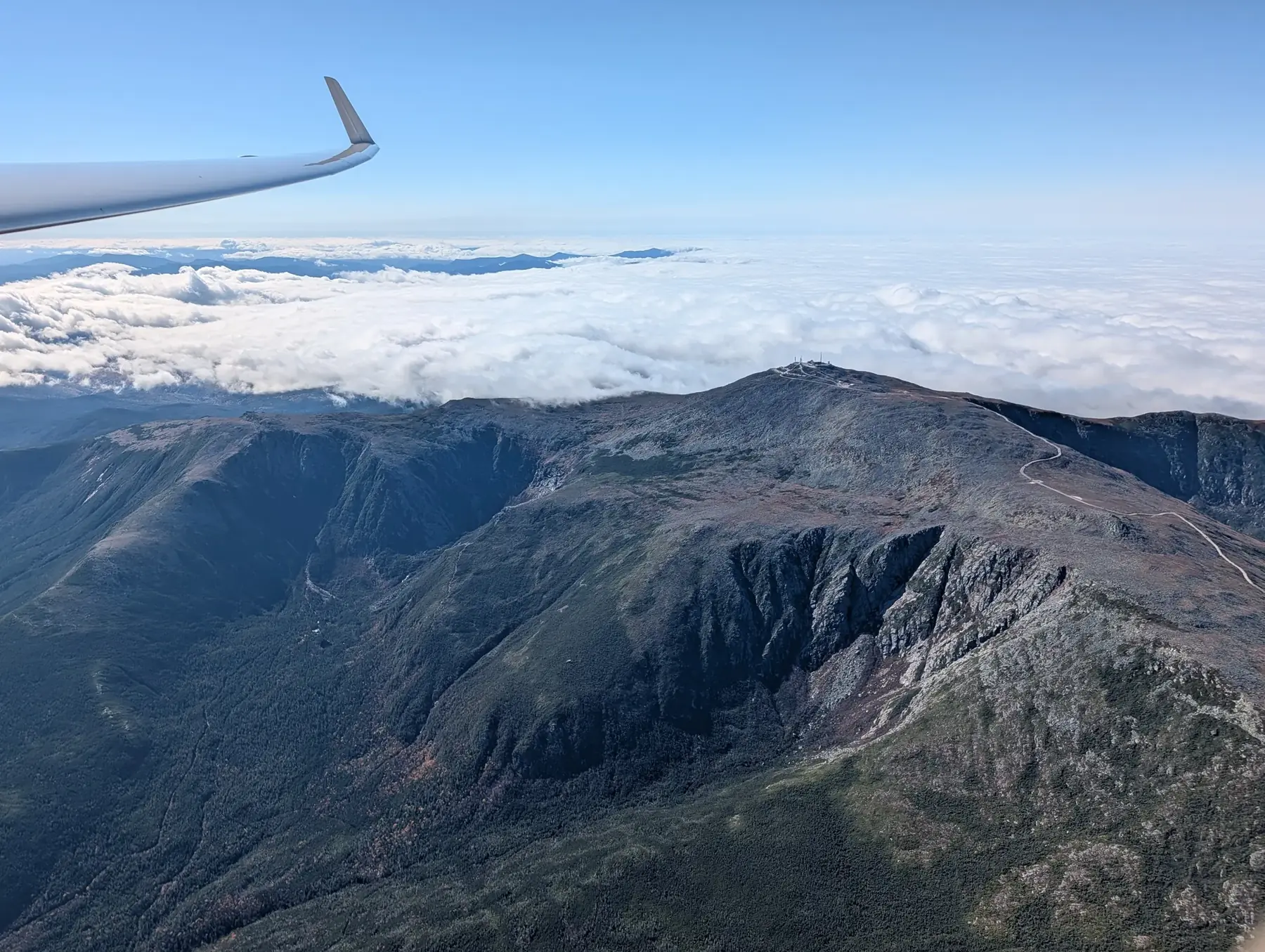
The summit cone of Mount Washington seen from the wing of a glider, with an undercast beyond

From the 2026 camp

Stepping Up to the Wave

Monday's forecast called for a weak start and stronger conditions in the afternoon. There was also a risk of the clouds below closing in under us. Getting to 8,000 ft took a mix of mountain flying techniques. I needed a low save, a ridge climb to get back up, and a turbulent rotor climb before I could move upwind into the wave.

Thomas Van de Velde · October 12, 2026 · Gorham (2G8)

Scroll

scrub or play

Loading the terrain and the track…

Keep scrolling — the flight plays itself, phase by phase

Tow & sink · 12:12 – 12:27

A no-contact release

I gambled on a direct tow to the primary wave as the easy way in but ended up taking the hard route. I released at 4,300 ft into air that wasn't working yet. I spent ten minutes probing the lee side and made one fast run east looking for a window, before giving up. By 12:27 I was down to 2,300 ft and heading back towards Gorham looking for a last ditch save at the Moriah–Carter ridge. I found a small thermal just strong enough to lift me on the foothills of the Carters.
The ridge · 12:27 – 12:55

Working the ridge

The next half hour was the real work of the day. The ridge's northwest-facing flank was giving just enough — true ridge lift plus the odd scrap of rotor — to hold and slowly gain. I worked it in the low 2,000s between Imp Face and Mount Surprise, never far off the rocks.

At 12:35 came the low point of the flight: 1,857 ft. There is nothing to land on down that flank, so I stayed with the ridge until it gave me enough altitude to leave.

Below the rotor · 12:55 – 13:00

Crossing the valley

Then the day began to change, as forecast. By 12:55 the ridge had carried me to 3,900 ft, and I left it to cross the valley west, under the rotor, for the lee of the Presidential range. The crossing cost about 700 ft and bottomed at 3,200; low, but with a rotor cloud in sight.

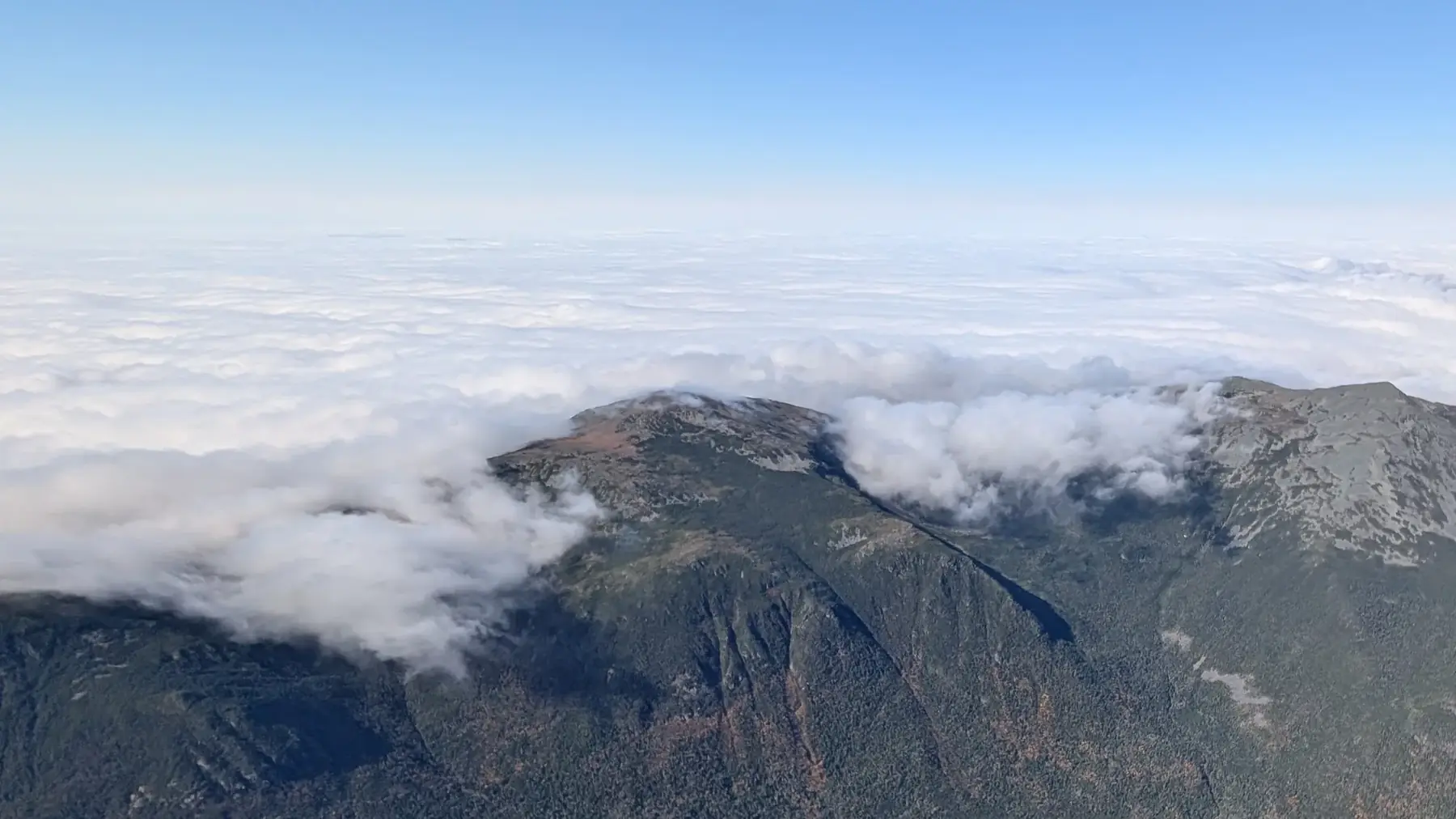
Cloud spilling over a mountain ridge, with an undercast beyond and blue sky above
Cloud spilling over the ridge while the wave gets going.

Rotor climb · 13:00 – 13:11

Climbing out in the rotor

Finally. I climbed out of the valley in the rotor's turbulent air, circling in broken lift for twelve steady minutes, from 3,500 to 5,700 ft. The best five of them averaged 350 ft/min.

Wave climb · 13:11 – 13:19

The wave climb

Reaching the top of the rotor, I pushed upwind into the primary wave. Rough turbulence changed to long smooth legs back and forth across the lift, the vario finally steady, and the altimeter winding up faster than it had all flight. By 13:20 I was at 7,600 ft.

Upwind · 13:19 – 13:25

Pushing upwind

The last move was the upwind one. I pushed northwest into the strongest part of the primary, over the rim of the Great Gulf near The Horn, and topped out around 8,000 ft when we received the radio call about the closing sky over Gorham airport. The summit cone slid by under the left wing, with the undercast lying over everything north of the mountain.

The summit cone of Mount Washington seen from the wing of a glider, with an undercast beyond
The summit cone under the left wing, the undercast over everything north.

Home · 13:25 – 13:36

Going home

The camp was already shutting down below me: the ceiling was lowering, the gusts were up, and the tow pilots had stopped launching gliders in the turbulent air. I took one more look at the mountain, turned downwind, and rode the long glide home. I landed at 13:36.

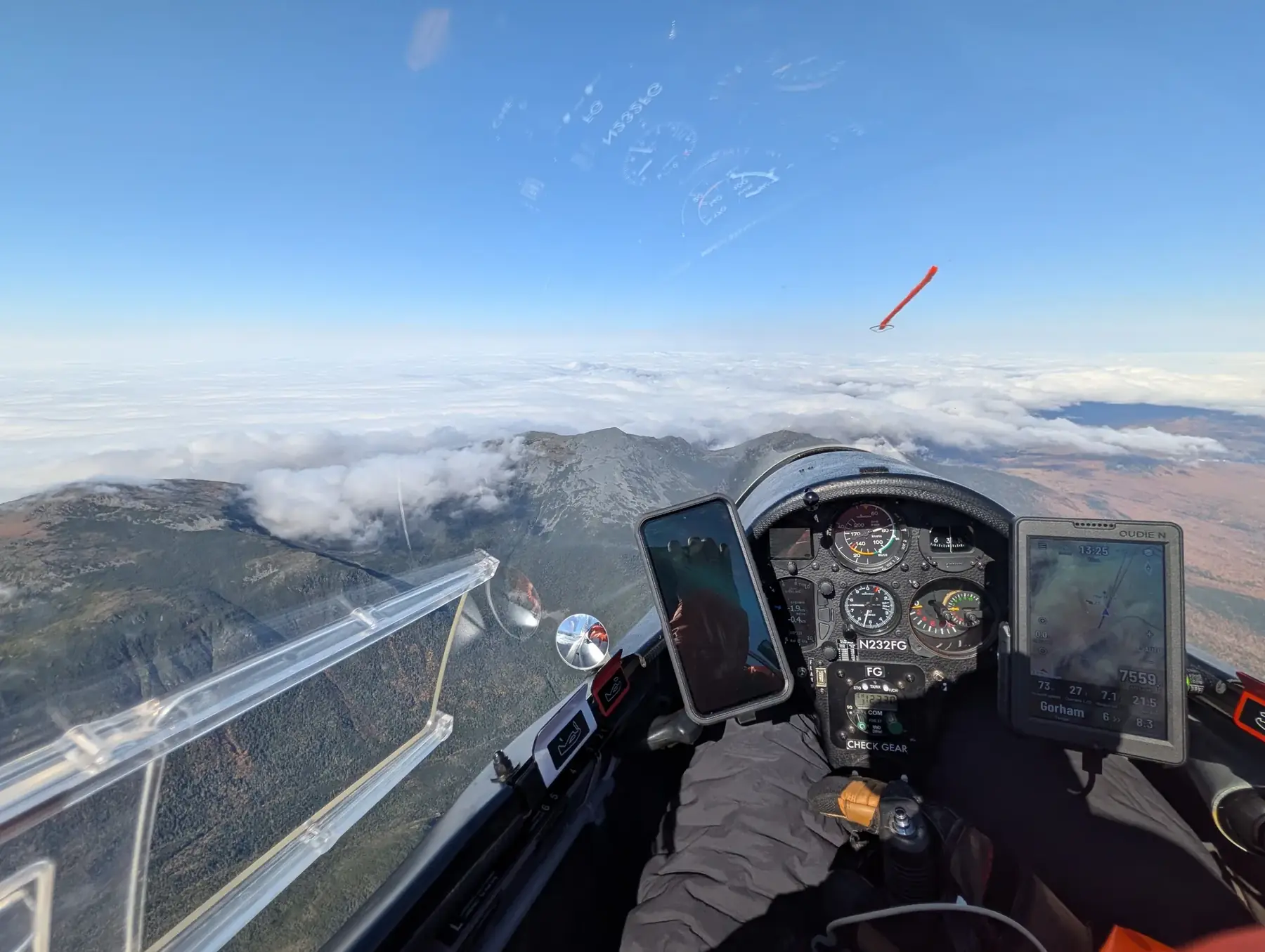
Cockpit view of a glider over the mountains, with the flight computer showing 7,559 feet at 13:25
13:25 — 7,559 ft on the panel, Gorham six miles out.